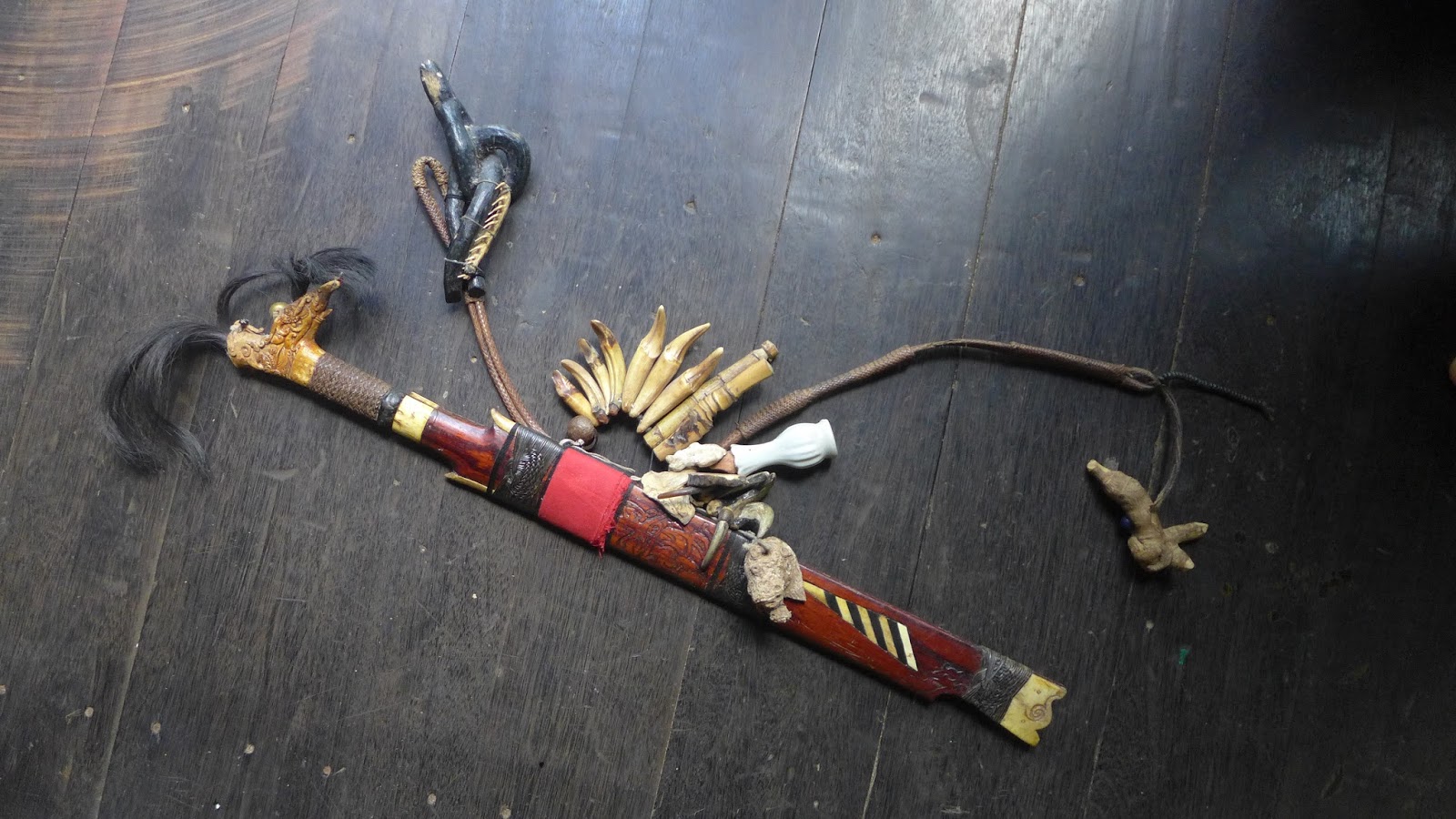
The traditional sandungs or second burial houses of Dayak tribes around the Palangka Raya area, are brilliantly coloured, some with fantastic detail and finesse. The fearsome snake eater keeps troublesome spirits away. See them on our mid-week cruises.
Thursday, December 29, 2016
Saturday, December 3, 2016
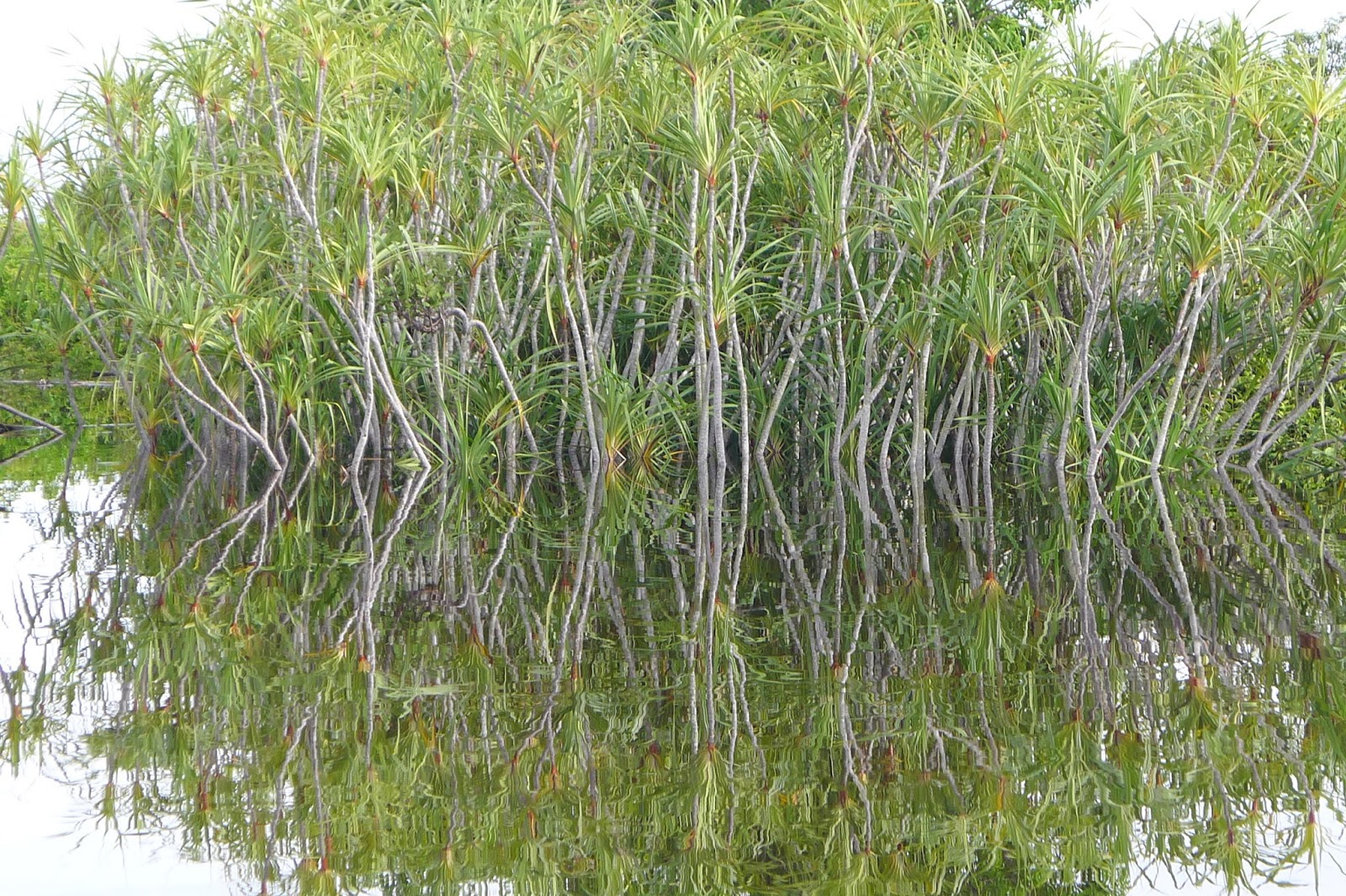
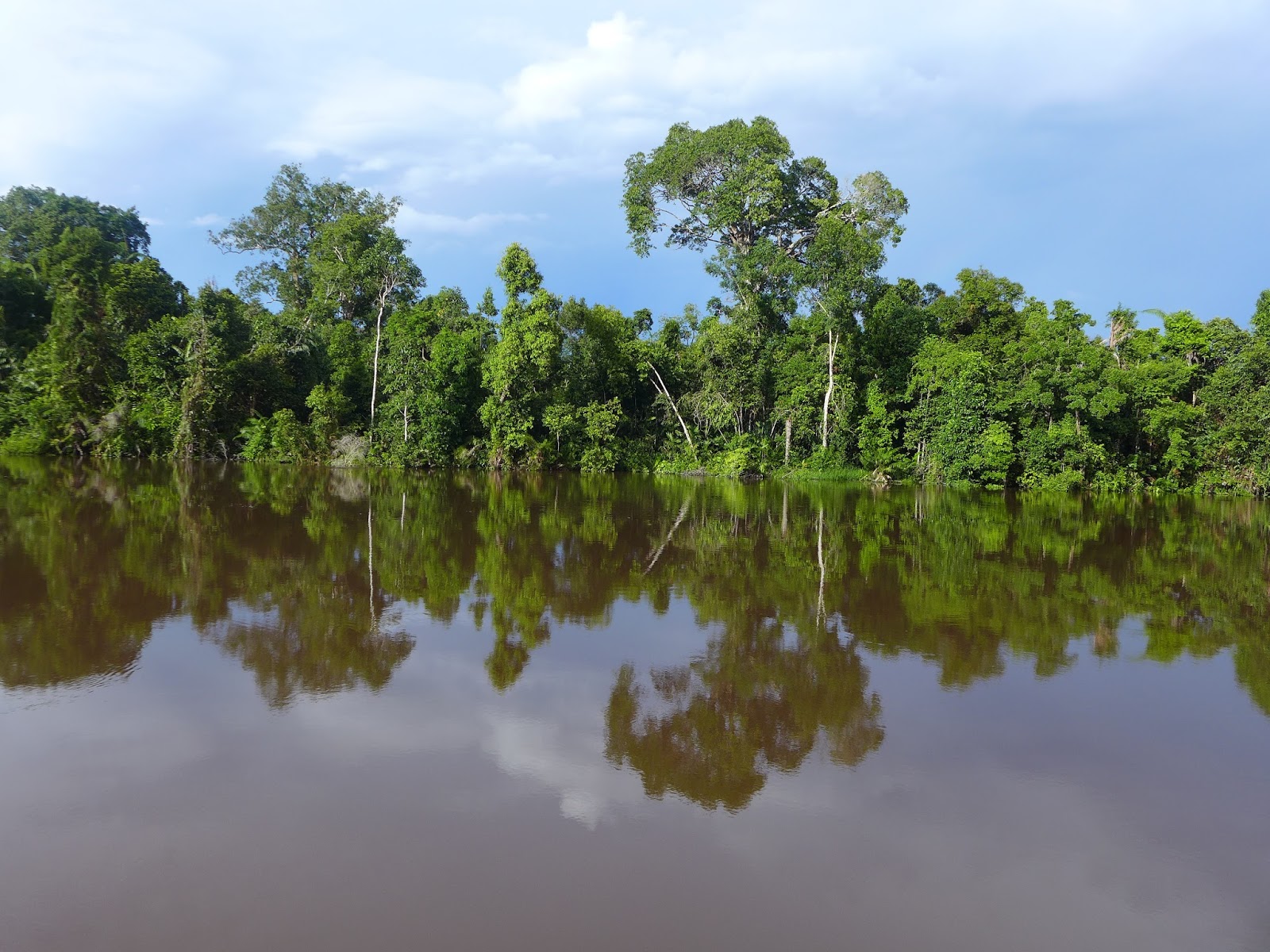
Glassy reflections on the black water lakes
Shadowing the sweeping bends and lowland forests of the lower Katingan River, canals and rivers draining the forests and stranded river bends form a web of waterways. Stained coffee colour, the water is an almost perfect mirror, and those photographers loving the effects, and turning their photos 90 degrees, are rewarded with whimsical images of the spirits of the forest. Most of these photos were taken by Osanna Vaughn, recording our trip made in early November this year.
Tuesday, November 22, 2016
A private charter on the Spirit of Kalimantan
The Spirit of Kalimantan charter boat cruises the Rungan and Kahayan Rivers, The forested riversides and winding course of the river, create many islands, lakes and waterways. Some of these islands are pre-release refuges for rehabilitated orang-utans from the BOSF program, which guests on board can see as we cruise along. Air conditioned cabins, comfortable screened saloon lounge, open air deck with easy chairs and roof top terrace is comfortably furnished for up to 8 passengers. Food is freshly prepared on board and served in the saloon. Relax and watch the scenery slip past. We stop at villages and have some short walks and canoe rides to break up the day!
The Rungan Forests - Exploring the Natural Heritage of Ancient Borneo close to Palangka Raya
At ground level, a green and brown humid world of fallen leaves, mosses and lichens, and decaying tree trunks shelters under the towering canopy of a lowland dipterocarp forest where all living things strain for light and space. Weak sunlight mottles the trunks of the dipterocarps, the reddish bark of the galam tikus, balanced on its slender buttress roots, orchids, nepenthes or the carnivorous pitcher plants, and the local resin damar trees, to name but a few species in this richly diverse forest.
This gem lies in a secret location, close to Palangka Raya. A primary forest long nurtured by its traditional owners, this place was protected also by its inaccessibility. Now much surrounding it has been logged and mined, and access is easier, but the forest quietly persists due to this strong traditional ownership being joined by multi stakeholder group of researchers, business, and local government. It aims to build a foundation for forest and biodiversity conservation in an area under-studied and highly-threatened which was, until recently, a conservation afterthought even though this is probably the largest relatively-intact lowland forest in Borneo having no formal conservation program.
Within an area of low hills, the original dry trails developed by villagers looking for forest resins and other natural bounty have been further developed by researchers for mapping forest types and bio-diversity. Small rivulets and soaks are damp arteries which rise and fall with the rain, quickly turning into mud baths.
I accepted an invitation - who wouldn't - to visit this remarkable forest a couple of months ago. Reaching the location by bus, boat, canoe, mining truck and finally on foot, it was a journey of about 3.5 hours from Palangka Raya. Accessing the site firstly along the course of a small river trashed by gold miners, we entered the forest. From the bleached, white sand, radiating heat, we entered the cooler world of the forest.
Our campsite, the research station, in the centre of the forest, was made of saplings with tarpaulins and rice sacks (for beds) stretched across. Basic, and all above ground to escape flooding, it included male and female dorms, a mess and meeting area. The nearby creek provided water for bathing in the temporary bathrooms. This was built in partnership with a Palangkaraya University. Now, a community forest management unit has been established and programs of environmental education and sustainable development are being implemented.
This is all in support of the local village’s quest to create a protected community forest.
After a comfortable sleep, we set off on walks. These forest transects give researchers a grid to identify sites and to orientate themselves within this undisturbed forest. There are plans to open the area for some visits, during times which would not disturb ongoing research.
If you are interested to go, ask us.
This is all in support of the local village’s quest to create a protected community forest.
After a comfortable sleep, we set off on walks. These forest transects give researchers a grid to identify sites and to orientate themselves within this undisturbed forest. There are plans to open the area for some visits, during times which would not disturb ongoing research.
If you are interested to go, ask us.
Wednesday, October 5, 2016
A Walk in the Sebangau National Park with WOW Borneo
We're opening a new cruise route on the Katingan River from November 2016. Explore with us the Sebangau National Park, traditional Dayak communities, float over the perfect reflections on black water lakes, watch as the thorny rattan vines are woven into beautiful mats, all accessible from the Katingan River and our adventurous little boat, the Ruhui Rahayu. The Sebangau National Park is home to the largest population of wild orang-utans in the world, as well as many other endangered species such as the Malayan sun bear, gibbons, hornbills and the clouded leopard.
Be the first to experience this new route from info@wowborneo.com.
Thursday, September 1, 2016
August and September dry season cruising
Last year, we experienced an El Nino long dry season marked by smoke from land clearance fires. This year, with the promised La Nina weather effect, a few dry weeks in August may be giving way to an early onset of the rains. Today, as I write this, heavy rains are falling in Palangka Raya. A few days ago, I joined a cruise on board the Rahai'i Pangun and experienced the lower water levels and baking heat of the end of the dry. The clear skies and rich morning and evening light were the perfect conditions for photographs.
A special treat, in the slow, grinding heat of the afternoon, was glimpsing a family of otters on a nearby sandbank, come out of the forest for a spot of sunbathing, before skipping off in the direction of a fisherman's net. Goodluck little fellas!
Sunday, May 22, 2016
Spectacular and little known Gagu Longhouse
Tumbang Gagu Longhouse was founded in 1870 using the traditional Dayak method of releasing a chicken and seeing where it roosts. In an isolated area, on a rising by a pretty rivulet, the longhouse was built by traditional owners, mainly village head Singa Raja Antang bin Lambang Dandu, after a grant from the Dutch and Antang's own personal wealth made it possible. Close to the sources of his wealth in the abundant forests nearby, strategically placed on his export routes to the port at Sampit, the longhouse became home for his 3 wives, each in her own apartment, with the other families.
55 meters long, it is built in the traditional style atop huge ulin ironwood tree trunks and other supporting poles numbering well over 200. Roughly hewn by adzes and towering 5 meters over the sloping ground, the longhouse provides protection and shelter for the families living in the midst of the forest. The niched poles leaning against the longhouse give slippery access, but may be quickly raised if trouble looms.
The longhouse remains in the hands of descendants of the original owners, though currently only two families live there. In the central apartment live Antang's grandson, Pak Labuang and his wife, Ibu Leri, now old but determined to keep the tradition and majesty of the longhouse alive.
A village has grown up nearby and natural resources are still being mined from the abundant natural environment. Gold mining is a dirty and inescapable feature of the waterways, most large trees have now gone, traditional slash and burn agriculture is penetrating the re-growth forests, and banana plantations are springing up in their wake.
About 7 hours from Palangkaraya by road, and a further hour by speedboat on the Katingan River, the last leg to the longhouse is by foot, just over 2 hours along a hilly forest trail. Long periods of rain made the rivers misty and the trail slippery and flooded.
From the outset, losing all phone signals was a bonus. We had a leisurely time visiting in the village, seeing preparations for the brewing of the local rice wine and chatting with a village elder about his warrior ancestors. The provisions we brought were generously cooked by Ibu Leri, and eaten in her traditional kitchen.
Heavy rains and high water levels made an exciting canoe trip upstream, through dense stands of bamboo into places where you can hear the hornbill call, beyond the muddy mining waters. Skimming across pure black water in a tunnel of brilliant green and stopping for a dip in the clean water was a fitting finale to the trip.
Arrange your trip to this distant and little known longhouse through us at info@wowborneo.com.
55 meters long, it is built in the traditional style atop huge ulin ironwood tree trunks and other supporting poles numbering well over 200. Roughly hewn by adzes and towering 5 meters over the sloping ground, the longhouse provides protection and shelter for the families living in the midst of the forest. The niched poles leaning against the longhouse give slippery access, but may be quickly raised if trouble looms.
The longhouse remains in the hands of descendants of the original owners, though currently only two families live there. In the central apartment live Antang's grandson, Pak Labuang and his wife, Ibu Leri, now old but determined to keep the tradition and majesty of the longhouse alive.
A village has grown up nearby and natural resources are still being mined from the abundant natural environment. Gold mining is a dirty and inescapable feature of the waterways, most large trees have now gone, traditional slash and burn agriculture is penetrating the re-growth forests, and banana plantations are springing up in their wake.
About 7 hours from Palangkaraya by road, and a further hour by speedboat on the Katingan River, the last leg to the longhouse is by foot, just over 2 hours along a hilly forest trail. Long periods of rain made the rivers misty and the trail slippery and flooded.
From the outset, losing all phone signals was a bonus. We had a leisurely time visiting in the village, seeing preparations for the brewing of the local rice wine and chatting with a village elder about his warrior ancestors. The provisions we brought were generously cooked by Ibu Leri, and eaten in her traditional kitchen.
Heavy rains and high water levels made an exciting canoe trip upstream, through dense stands of bamboo into places where you can hear the hornbill call, beyond the muddy mining waters. Skimming across pure black water in a tunnel of brilliant green and stopping for a dip in the clean water was a fitting finale to the trip.
Arrange your trip to this distant and little known longhouse through us at info@wowborneo.com.
Subscribe to:
Posts (Atom)